
A-MUSE-ING
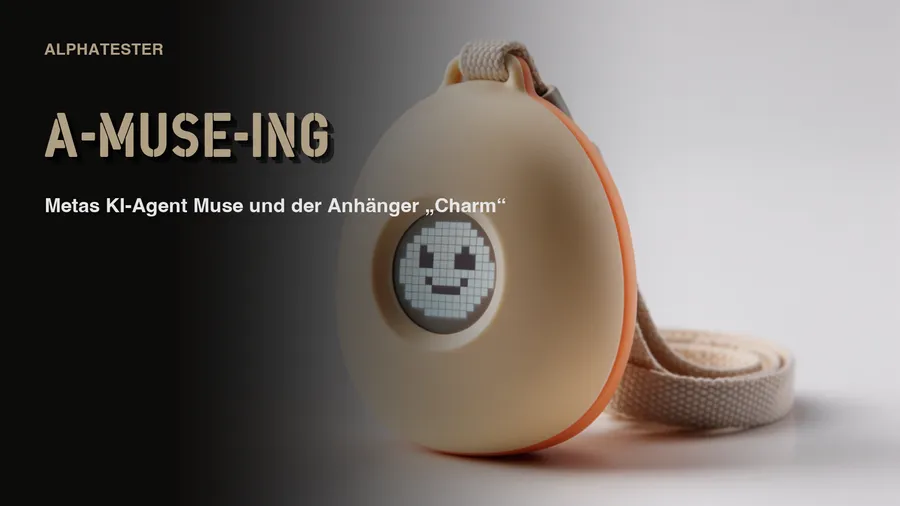
A-MUSE-ING: Meta’s AI agent is stealing the show right now
Mark Zuckerberg wants to bring AI agents into every corner of our lives. With the new app Muse, Meta has actually landed a surprise hit – and presented a small gadget that immediately reminded me of my Tamagotchi from the nineties.
The name was too good not to steal: A-MUSE-ING. So, let’s go.
What Muse is actually supposed to do
Muse is Meta’s attempt to take AI agents out of the developer corner and turn them into an everyday product for everyone. The app is meant to shop online, book trips, fill in forms and even negotiate on your behalf. Meta’s AI chief Alexandr Wang recently told a conference how Muse helped a user cut his monthly cable bill by 85 dollars.
And it apparently resonates: Muse is currently the most-downloaded app in the American app stores of Apple and Google. According to the market research group Sensor Tower, it has already been downloaded more than 2.8 million times since launch – not far behind the ChatGPT app, which reached 3.7 million in a comparable period.
The stock market joins the party
Since Muse was unveiled, Meta’s stock has risen by more than 20 percent. Analysts at JPMorgan believe the app could become the most-used consumer AI application since ChatGPT. Chipmakers such as Intel and AMD gained too, because more AI agents simply need more computing power. On the other side, stocks from industries that might see Muse as a threat lost ground – financial services and travel portals, for example.
Meta is investing between 130 and 145 billion dollars this year, much of it in AI infrastructure. After years in which the company lagged behind on standalone AI products, Muse is now the great hope.
The catch: access to your entire digital life
For Muse to shop or negotiate for you, it needs access to very personal data – emails, accounts on other sites, even bank accounts can be linked. Meta insists users can define exactly how far this access goes, and that Muse runs on an isolated computer that cannot see passwords or payment methods at all.
But I have to be honest: with a company that has so often made headlines for data scandals, I would look twice before linking my bank. The analysts at Bank of America see it similarly and cite data protection as a possible stumbling block for Muse.
Charm: the AI pendant that looks like a Tamagotchi
By the way, the picture above is not the official press photo – I built my own version of it with AI (Krea 2 Large) because the description grabbed me immediately: alongside Muse, Meta has presented a small device of its own, built specifically for the agent. It’s called Charm, is about the size of a key fob and is due out later this year.
According to Zuckerberg, Charm is meant to be, next to the Meta glasses, the fastest way to talk to Muse. And yes, the association with the Tamagotchi is definitely no coincidence – a little thing to hang around your neck that looks at you and talks to you. OpenAI is also rumored to be working on an AI device of its own, but what it will look like is still open.
Not everyone is playing along
Meta has meanwhile struck partnerships with companies like Walmart and the travel portal Expedia, which link their sites with Muse. Amazon, on the other hand, recently simply blocked Muse – the online retailer says Meta never informed it that the agent shops on its site. It shows pretty well that nobody really knows the rules of the game yet.
My conclusion
An AI agent that actually gets things done for me instead of just answering – that really appeals to me. But for that it would need access to quite a lot of my digital life, and that is exactly where I would be especially careful with Meta. The success of Muse nevertheless shows: the mass market for AI agents is here as soon as someone gets the product right.
Would you give your AI access to your email and bank account so it can shop and negotiate for you?